Social media platforms now play a central role in the daily lives of Tunisians. The figures shared during Insight Day 2026 highlight a clear shift in user behavior: Instagram has become the preferred platform, YouTube stands out as the most cross-generational medium, and brands must learn how to better leverage data to remain competitive.
Instagram Becomes Tunisians' Favorite Social Media Platform
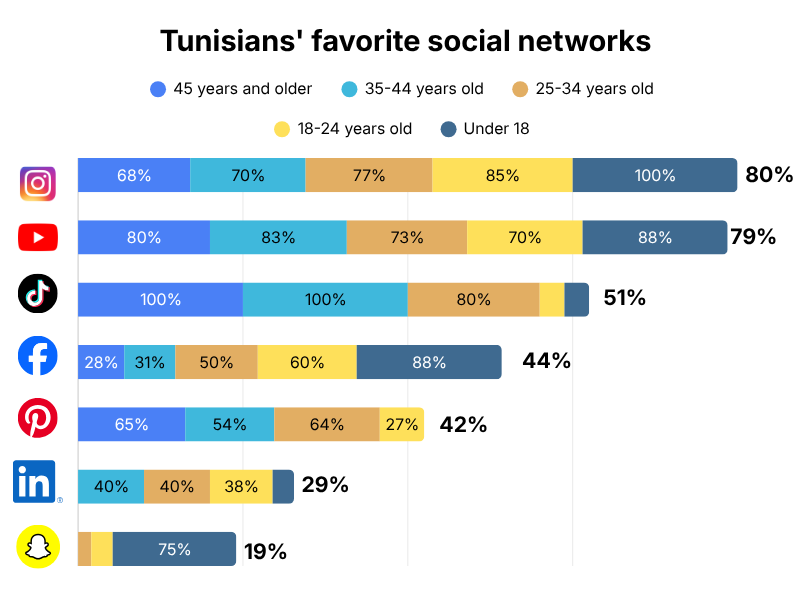
Instagram is currently the most popular social media platform among Tunisians, particularly among younger generations.
Among users under 18 years old, Instagram reaches a 100% preference rate. The platform also maintains strong popularity among the 18–24 and 25–34 age groups, while continuing to perform well among older audiences.
This popularity can be explained by several factors:
- The growing success of Reels;
- The increasing influence of content creators;
- The ease of consuming short-form content;
- The importance of visual and video content in digital habits.
YouTube Becomes the Most Cross-Generational Platform
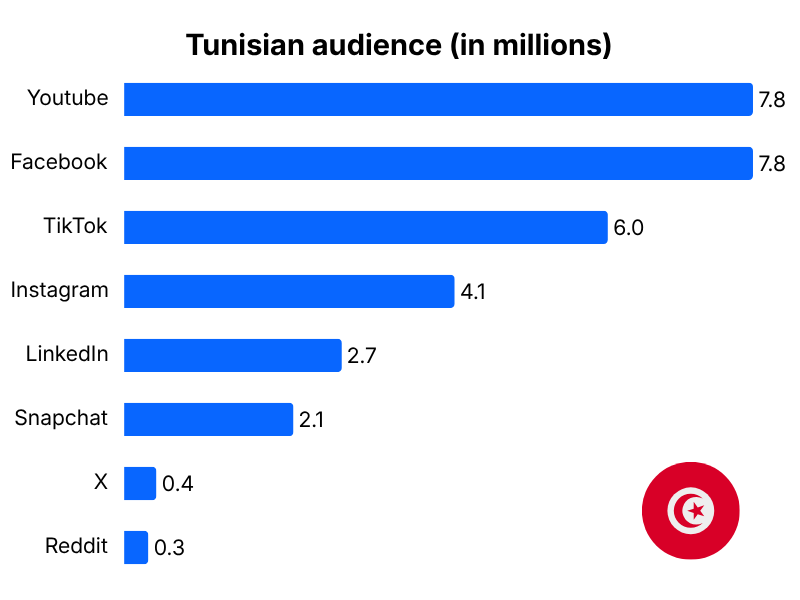
YouTube stands out for its ability to reach all age groups. Unlike platforms that are primarily focused on younger audiences, YouTube is widely used by teenagers, adults, and seniors alike.
More than 70% of Tunisians report using YouTube every day. The platform has become a major space for discovery, learning, influence, and entertainment.

For brands, this means YouTube should no longer be viewed as just a video-sharing platform but rather as a strategic media channel.
Facebook Remains Important for Mature Audiences
Although Facebook continues to lose popularity among younger generations, it remains highly relevant among users aged 35 and above.
As a result, Facebook continues to play an important role for institutional communications, official announcements, events, local communities, and content targeting adult audiences.
TikTok and Snapchat Maintain a Strong Presence Among Young People
TikTok and Snapchat remain particularly popular among users under 18 years old. These platforms are associated with short, spontaneous, creative, and highly engaging content.
For brands targeting younger audiences, these platforms can be highly effective, provided they adopt an authentic tone and content style aligned with each platform’s culture.
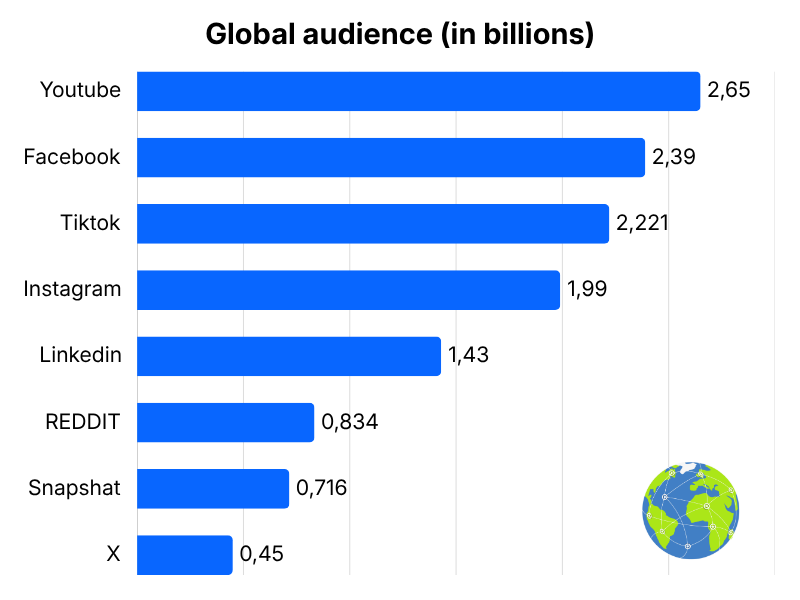
Social Media Platforms Are Increasingly Driven by Artificial Intelligence
In 2026, social media platforms are no longer driven solely by followers or simple interactions. Artificial intelligence now plays a major role in determining which content users see.
Algorithms analyze interests, viewing time, searches, shares, and browsing behavior to personalize content recommendations.
As a result, a piece of content can reach a large audience even if a brand has relatively few followers, as long as it is relevant, engaging, and aligned with user expectations.
The Challenge for Brands: Making Better Use of Their Data
As social media evolves, brands can no longer rely solely on publishing regularly and tracking likes or follower counts.
Today, it is essential to understand what users watch, like, share, and search for.
Brands must learn how to use their data to:
- Better understand their audience;
- Create more relevant content;
- Select the right communication channels;
- Improve advertising performance;
- Measure meaningful business outcomes.
In 2026, the most successful brands will not necessarily be those that publish the most content, but those that best understand their audiences and use data to make smarter decisions.
Key Takeaways for Brands
The findings presented during Insight Day 2026 confirm that digital habits are evolving rapidly in Tunisia. Each platform now plays a specific role within a brand’s communication strategy.
- Instagram is ideal for visibility, brand image, and engagement;
- YouTube has become a powerful channel for reaching all generations;
- Facebook remains valuable for adult audiences and institutional communications;
- TikTok and Snapchat are essential for engaging younger audiences;
- Data has become a critical asset for marketing decision-making.
----
In 2026, social media platforms are no longer simply publishing channels. They have become powerful tools for customer understanding, visibility, influence, and business performance.
To remain competitive, brands must adapt their content to each platform, follow emerging user behaviors, and make better use of their data.
Success no longer depends solely on posting frequency but on the ability to understand audience expectations and deliver the right content, at the right time, through the right channel.
Sources
- MEDIANET Survey on Artificial Intelligence Usage in Tunisia, conducted in February 2026 among Tunisian users of generative AI tools.
- Statcounter – Global Trends.
- DataReportal.