Artificial intelligence is now emerging as one of the most transformative technologies in the global economy.
By 2026, nearly one in six people worldwide is already using AI tools to work, learn, or solve problems, confirming the transition into a phase of mass adoption of generative AI technologies.
To understand the specific dynamics of the African continent, the dominant tools, and business opportunities related to AI in Africa, MEDIANET conducted an analysis based on:
- An Africa AI Adoption Index
- Analysis of the most widely used AI tools
- Study of the most visited websites in several African countries
Africa enters a new phase of AI adoption
Africa is experiencing a dynamic comparable to the mobile revolution of the 2000s. Companies are rapidly adopting AI to automate tasks, improve productivity, create content, and develop new services. However, this adoption remains uneven across countries, depending on digital infrastructure, the maturity of startup ecosystems, and technological investments.
Leading African countries in AI adoption
Top 10 African countries by level of AI adoption
The ranking below was established based on an AI Adoption Index, a score out of 100 based on digital maturity, usage and diversity of AI tools, startup ecosystem, and traffic to AI platforms.
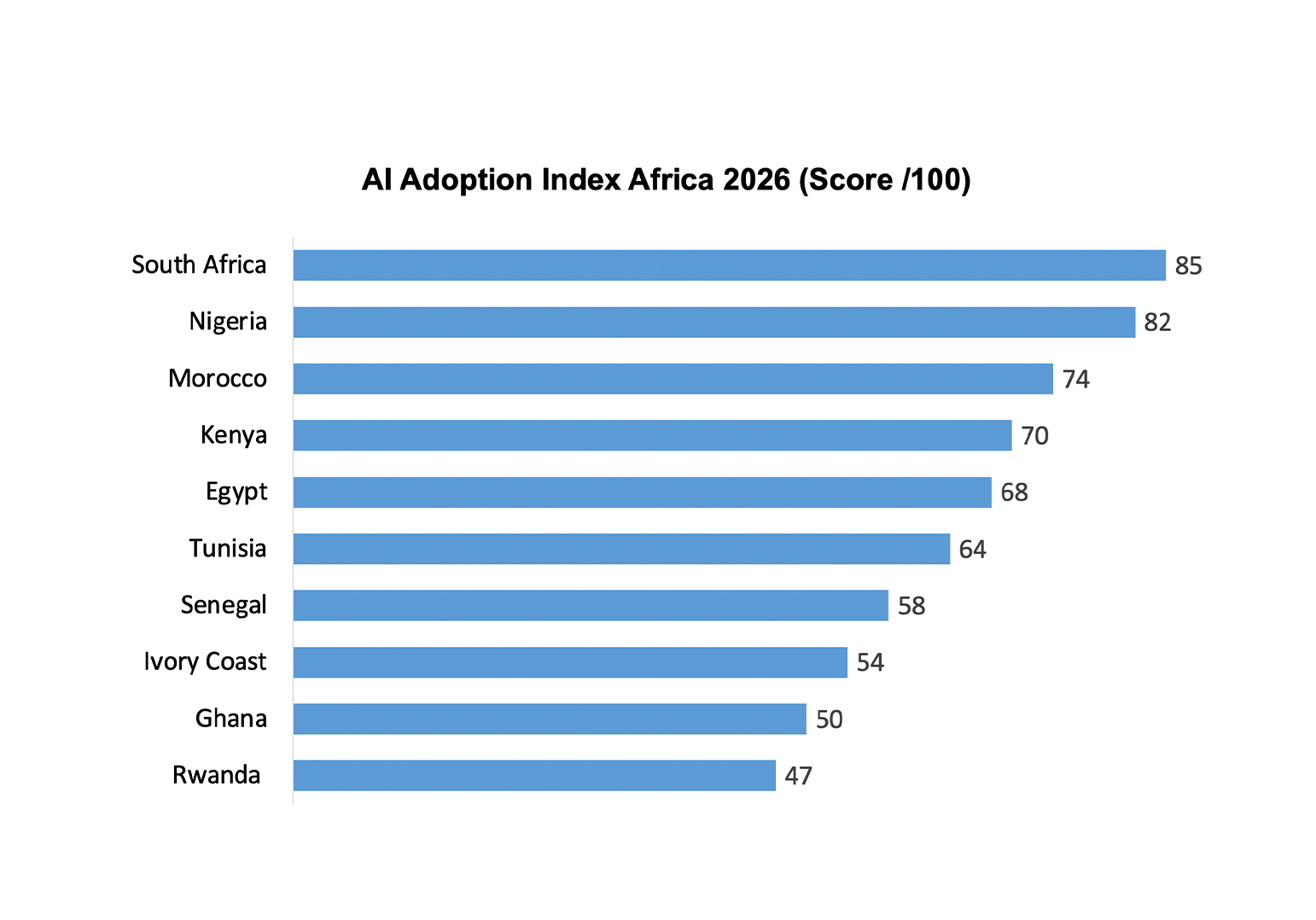
By analyzing the ranking derived from the different calculated metrics, we conclude that these countries share common characteristics, including :
- Major African tech hubs
- Startup investments
- Advanced digital infrastructure
Dominant AI tools in Africa
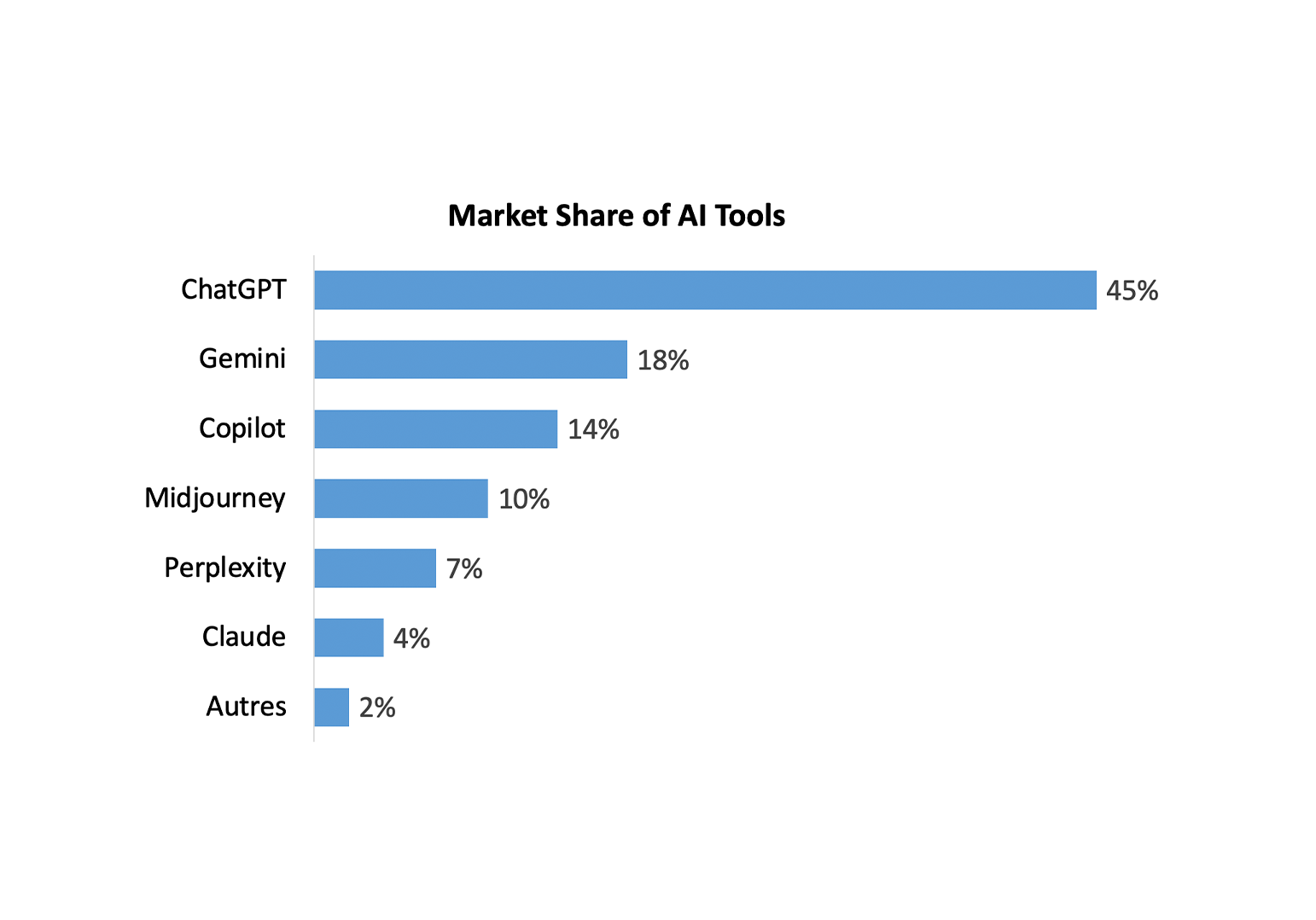
Market share analysis shows a clear dominance of conversational assistants, which account for more than 70% of AI usage, particularly for:
- Content generation
- Information search
- Technical support
- Development assistance
AI business opportunities in Africa
Based on annual growth trends observed across different countries and platforms, several scientific studies predict a fivefold increase in adoption by 2030.
In correlation with the acceleration driven by generative AI, business automation, and the digital transformation of public services, the study identifies several high-growth markets:
- AI Consulting: AI transformation support
- AI Automation: process automation
- AI Marketing: content, SEO, advertising
- Data & AI Platforms: advanced data analytics
- African AI SaaS: solutions tailored to local markets
The role of digital transformation players
For African companies, integrating AI is becoming a strategic challenge, and organizations must:
- Train their teams
- Automate their workflows
- Leverage their data
- Integrate AI into their business processes
It is in this context that MEDIANET supports organizations in their digital transformation and the integration of artificial intelligence by combining technological expertise, digital strategy, and innovation.
Indeed, artificial intelligence could play a role similar to that of mobile technology in the 2000s: a driver of innovation, productivity, and economic growth.
--------
In this article, we answered several key questions about the adoption of artificial intelligence in Africa: which countries are leading, which tools dominate the market, and what economic opportunities are emerging. Here are some additional questions often asked by decision-makers and companies about AI in Africa.
What is the level of artificial intelligence adoption in Africa in 2026?
AI adoption in Africa remains uneven across countries, but it is experiencing very rapid growth driven by tech startups, corporate digital transformation, and the increasing accessibility of generative AI tools. Several studies anticipate a multiplication of AI use within African companies by the end of the decade.
Why could Africa become a strategic market for artificial intelligence?
The continent combines several favorable factors: a young and connected population, strong entrepreneurial momentum, and significant needs for automation and digital services. AI can notably enable the development of solutions tailored to local challenges in sectors such as finance, healthcare, agriculture, and education.
How can African companies start using artificial intelligence?
Companies can begin gradually by integrating accessible AI tools to improve productivity: content generation, data analysis, task automation, or development assistance. The next step generally involves integrating AI into business processes and leveraging internal data to create more advanced solutions.
Sources